The EU's Carbon Border Adjustment Mechanism (CBAM) is designed to price the embedded emissions of carbon-intensive products entering the EU, encouraging non-EU nations to decarbonize their industrial processes. The transitional period spans from 2023 to 2025, leading to full enforcement in 2026.
During the transitional phase, the CBAM scope encompasses six carbon-intensive sectors: iron and steel (including downstream products such as screws and bolts), cement, fertilizers, aluminum (including its downstream products), electricity, and hydrogen. This regulatory scope is subject to expansion over time. The EU intends to evaluate whether to extend coverage to downstream products highly intensive in steel and aluminum, as well as other sectors currently covered under the EU ETS (with exact timelines and impacted industries awaiting official publication by the European Commission).
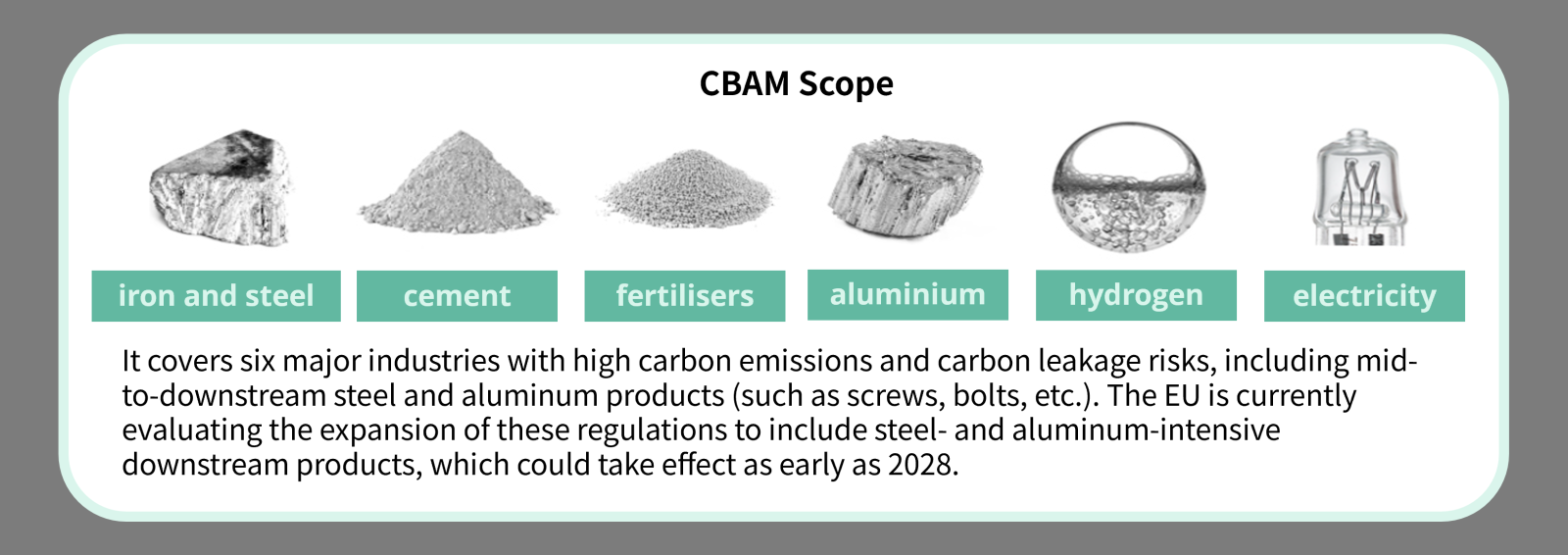 Regulated Products and Entities
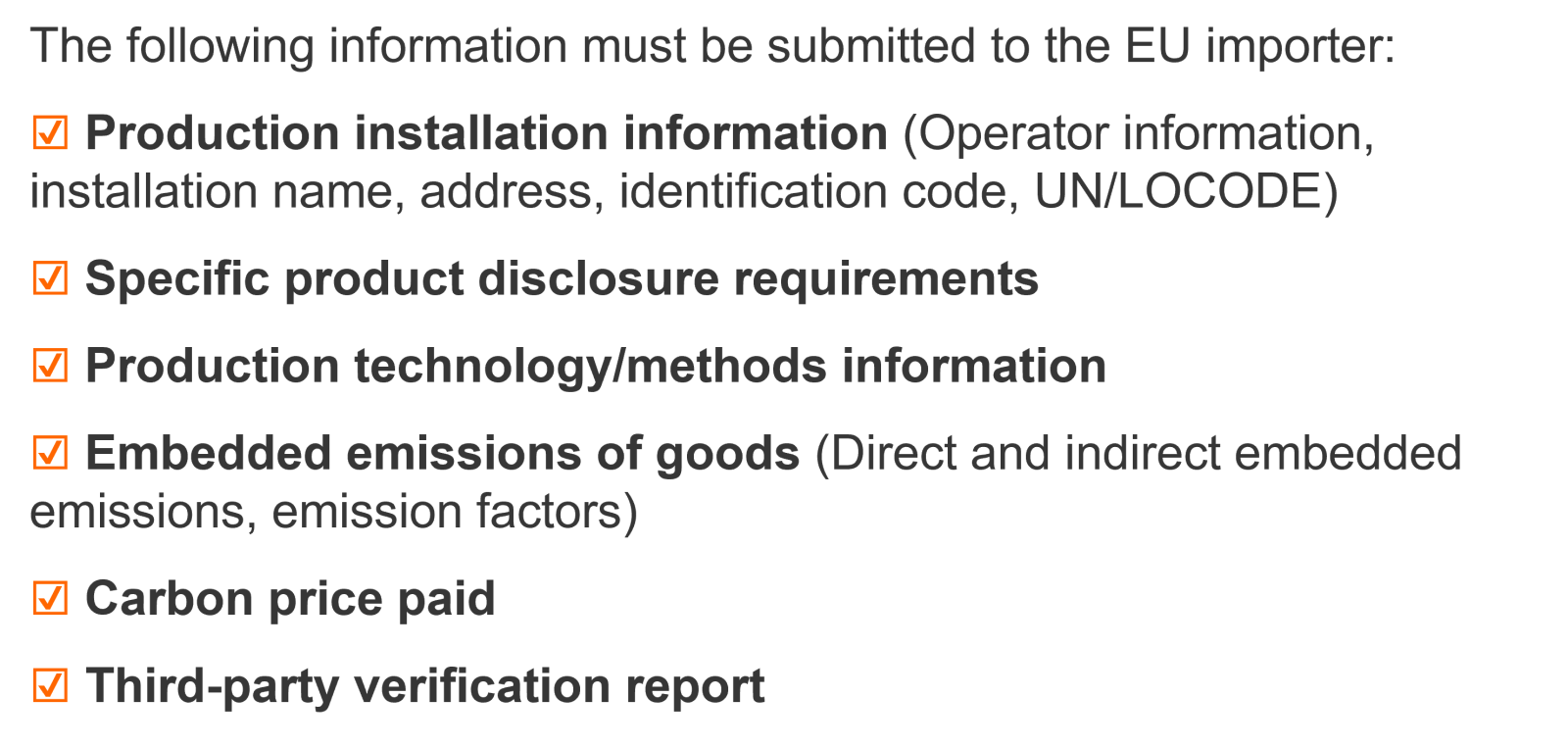
The EU has released the required reporting templates for CBAM. EU importers will act as authorized CBAM declarants, responsible for collecting data from non-EU installations and uploading it to the CBAM Transitional Registry. Upon full implementation, the submitted CBAM declaration must contain at least the following information:
- Installation Details ( Including producer/installation name, address, identifier, and UN/LOCODE)
- Embedded Emissions (Direct and indirect embedded emissions of the goods, along with applicable emission factors)
- Product-Specific Disclosures
- Carbon Pricing
- Production Technology
- Third-party Verification Reports
 Source: EU Carbon Border Adjustment Mechanism – Selected 30 FAQs
Source: EU Carbon Border Adjustment Mechanism – Selected 30 FAQs
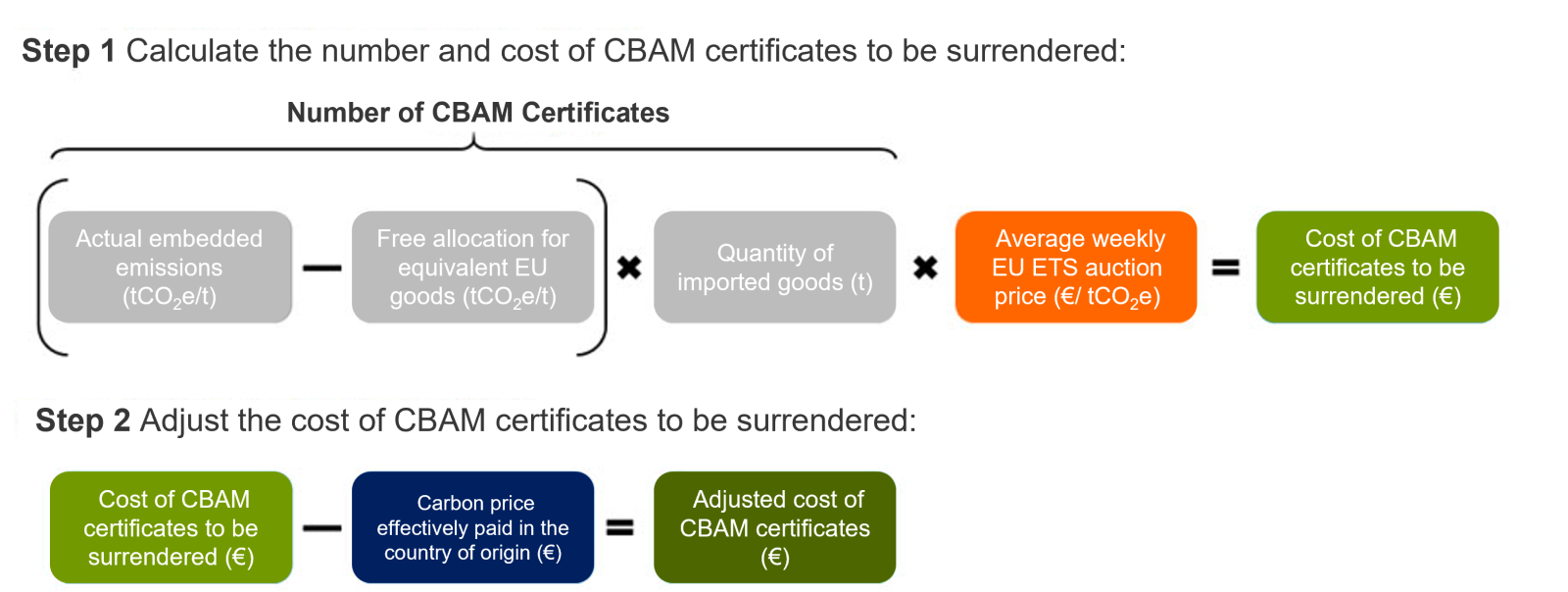
Once producers in the exporting countries provide the necessary data to the authorized CBAM declarant (the EU importer), the declarant purchases CBAM certificates from the competent authority. Since the first official declaration must be completed by May 31, 2027, declarants must surrender a sufficient number of certificates in their CBAM registry account to match the embedded emissions of the imported goods before the deadline.
※ Note: CBAM certificates are not required during the transitional period; only reporting obligations apply.
 Source: EU Carbon Border Adjustment Mechanism – Selected 30 FAQs
Source: EU Carbon Border Adjustment Mechanism – Selected 30 FAQs
Under CBAM regulations, authorized declarants must ensure that the number of CBAM certificates in their registry account covers at least 50% of the embedded emissions of imported goods at the end of each quarter. Failure to submit the annual declaration for the previous year’s emissions by September 30 will result in substantial penalties. Furthermore, payment of these fines does not relieve the declarant of their obligation to surrender the required CBAM certificates. Severe or repeated non-compliance may lead to the suspension of market access privileges.
Frequently Asked Questions
Interested in learning more?
Whether you're interested in regulatory updates, testing methods, market requirements, or sustainability topics, we'd love to hear from you.
Your question may even inspire our next article, FAQ, or webinar topic.
Tell us what you'd like to learn